Hydraulic Dynamic Simulation: From Component Modeling to Enterprise Process Integration

In collaboration with Vis Hydraulics, we developed a technical pathway dedicated to dynamic simulation applied to hydraulic systems.
The goal of the webinar series was not simply to showcase a hydraulic simulation software, but to build a complete journey: starting from the parametric modeling of components, progressing to the simulation of complex systems, and ultimately demonstrating how simulation can become a concrete part of company processes for design, validation, and optimization.
Throughout this article, you will find links to individual webinar deep-dives, including full video recordings and downloadable technical slides.
We started from the first level in terms of complexity: the component.
In the webinar dedicated to the parametric modeling of a hydraulic valve, we showed how to build and parameterize a dynamic model starting from geometry, highlighting how variations in parameters directly influence system behavior and performance.
This step represents the foundation of the entire simulation process. The quality of a hydraulic system simulation depends on the ability to accurately describe the behavior of each component it is made of.
From the component level, we then moved on to the complete system.
In the webinar dedicated to the simulation of a complete hydraulic system, we transformed a hydraulic schematic into a fully simulatable model, analyzing its dynamic behavior throughout the operating cycle.
It is at this stage that dynamic simulation fully demonstrates its value, making it possible to identify interactions, instabilities, and critical issues that are often difficult to detect using static approaches or directly through physical prototypes. Through application cases based on Vis components, we showed how to compare different configurations and quantitatively evaluate system performance.
The next step was to bring simulation into company processes.
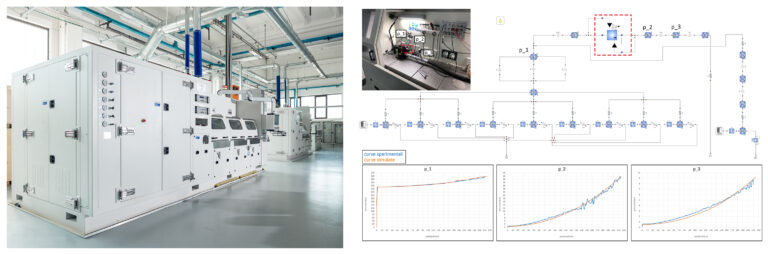
In the webinar focused on using simulation from the engineering department to the test bench, we demonstrated how dynamic simulation can become an operational tool supporting product development and validation activities.
Through practical examples developed at Vis’s Innovation Center, we showed how models can be used to quickly test design changes, support test bench activities, and accelerate the comparison between different solutions.
This often represents the true turning point in the adoption of simulation: moving from a tool used occasionally to a technology fully integrated into company processes.
Once integrated into processes, simulation also becomes a powerful optimization tool.
In the webinar dedicated to performance optimization and energy efficiency, we addressed how hydraulic systems can be optimized through dynamic simulation.
Through real-world cases, we demonstrated how different configurations can be rapidly compared, energy impacts evaluated, and simulation results translated into concrete design decisions—reducing development time and minimizing the need for multiple physical iterations.
The final step of the journey tackled a very practical question: how can simulation be effectively introduced into company processes?
In the final webinar, we presented concrete approaches to overcoming the main barriers to adopting hydraulic dynamic simulation, leveraging ready-to-use models, customized libraries, simplified interfaces, and technical support built around real application cases.
The ultimate goal is not to treat simulation as a standalone activity, but to progressively embed it as a natural part of design, validation, and optimization processes.
To bring all this content on hydraulic dynamic simulation together, we created a new technical section on the SmartFluidPower website, where webinars, recordings, technical slides, and application-focused insights on the modeling and simulation of hydraulic systems are available.
This area will continue to grow over time with new technical content and real-world cases dedicated to the simulation of hydraulic components and systems.